
In 2022, when the industrial landscape was still recalibrating after global supply chain shocks, we expressed the global demand for electrical conduits would surge to hit a USD 9.1 billion valuation by 2026. At the time, such a figure seemed ambitious to many. However, in the second quarter of 2026, the market has not only met that milestone but, in several high-growth regions, surpassed it.
Our past article, “Electrical Conduits: Global Demand for 2026 to Reach USD 9.1 Billion,” identified the primary catalysts of a worldwide push for grid modernization, the aggressive rollout of EV charging networks, and the rapid urbanization of the Asia-Pacific region. Today, these drivers have matured into a permanent industrial shift. But for the forward-thinking manufacturer, the question is no longer about whether the demand exists, it is about how to capture the next wave of that demand as we look toward 2029 and 2030.
The Current Landscape: Quality over Commodity
The achievement of the $9 billion mark has brought a significant change in procurement behavior. In 2022, the market was focused on availability. In 2026, the focus has shifted to compliance and performance. With the full implementation of the Carbon Border Adjustment Mechanism (CBAM) and stricter National Electrical Codes (NEC), the industry is moving away from low-spec, commodity tubing.
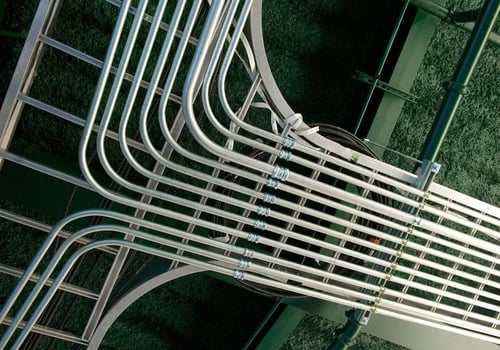
Today’s leading EPC (Engineering, Procurement, and Construction) firms are no longer just looking for "pipes"; they are looking for high-ductility Electrical Metallic Tubing (EMT) and Rigid Metal Conduits (RMC) that offer 360° corrosion protection and a lower carbon footprint. This is where the gap between traditional manufacturing and the future of the industry begins to widen.
The 2030 Outlook: AI, Hydrogen, and Smart Infrastructure
As we see the scenario for the next 3 to 4 years, three massive "macro-trends" will redefine the conduit and EMT sectors:
- AI-Driven Data Center Expansion: The exponential growth of Artificial Intelligence has triggered a global boom in data center construction. These facilities require ultra-reliable, EMI-shielded conduit systems to protect the massive power densities required by modern GPU clusters.
- The Green Hydrogen Transition: As industrial zones move toward hydrogen energy, the demand for specialized, hydrogen-ready steel infrastructure conduits that can withstand unique chemical stresses is set to skyrocket.
- Smart City Connectivity: The 5G rollout is evolving into 6G research, requiring a massive increase in urban "small cell" poles and protected raceway systems that blend structural integrity with aesthetic requirements.
Why In-line Galvanizing is the Deciding Factor?
To stay profitable in this $9 billion+ environment, the "old ways" of batch hot-dip galvanizing are becoming a liability. The high energy costs, excessive zinc waste, and inconsistent coating thicknesses of traditional methods cannot compete with the demands of the 2030 horizon.
This is why In-line Galvanizing has moved from a "competitive advantage" to an "operational necessity." Our proprietary in-line process integrates the galvanizing stage directly into the tube mill. The result? A tube with superior surface finish, enhanced mechanical strength, and 100% weld-seam protection, all achieved with significantly lower "gray energy" consumption.
The Path Forward
We had shared earlier about the $9.1 billion peak of 2026 and now, we are optimistic that the next four years will belong to the manufacturers who embrace Smart Factory integration and sustainable coating technologies. The conduit market of 2030 will reward those who can provide high-purity, high-strength solutions at a lower Total Cost of Ownership (TCO). If you are looking to modernize your production line or source the next generation of EMT and rigid conduits, the time to transition to in-line galvanizing is now.
Don’t just react to the market but define it. Contact our technical team today to explore how our in-line galvanizing solutions can prepare your facility for the 2030 infrastructure boom.